
Neck pain is one of the most common musculoskeletal symptoms in Denmark. Almost half of adults experience it at some point – and for many it returns again and again.
But what is the real cause? And when is massage the right solution?
Causes of neck pain
The neck supports and balances the head – which weighs 4-6 kg. It is a demanding task, and even small imbalances in posture and movement patterns can cause major discomfort.
The most common causes of neck pain are:
- Static working posture: Hours in front of a screen with your head bent forward puts constant strain on the neck muscles. The muscles maintain an isometric contraction for hours – and this causes soreness and stiffness.
- Stress and tension: Stress and tension typically settle in the neck and shoulders. Many people notice that the neck stiffens during periods of pressure.
- Sleeping position: A bad pillow or inappropriate sleeping position can cause your neck to 'crack' overnight.
- Myoses and trigger points: Tense muscle knots in the neck can radiate to the head and shoulders and cause persistent pain even at rest.
- Whiplash or acute injury: Rapid movements of the head – during accidents or sports – can damage the muscles, joints and connective tissue in the neck.
- Wear and tear changes: In the case of persistent or recurring neck pain, wear and tear changes in the neck joints and discs can contribute to the discomfort.
Symptoms of neck pain
Neck pain can manifest itself in many ways:
- Stiffness and limited mobility – difficulty turning or bending the head
- Pain in the neck that radiates to the head (tension headache)
- Pain down the shoulder and upper arm
- Tingling or numbness in the arm – signs of nerve pressure
- Tenderness when touching the neck muscles
- Fatigue and difficulty concentrating due to persistent pain
When does massage help?
Massage is particularly effective for neck pain caused by:
- Muscle tension and myosis – the classic office disorder
- Stress-related tension in the neck and shoulders
- Rehabilitation after whiplash when the acute phase is over
- Prevention – keeping muscles loose and mobile
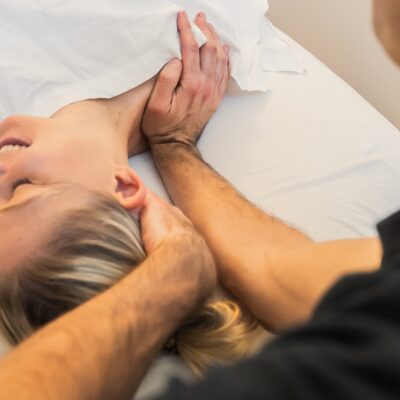
A professional masseur can work specifically with the tense structures, loosen myoses, increase blood circulation and give the neck freedom to move again.
When should you seek medical attention instead?
Seek medical attention if:
- You have severe tingling, numbness or weakness in your arm – this may indicate nerve pressure
- The pain came on suddenly and is very intense.
- You have had a fall, an accident, or a blow to the neck
- You experience dizziness, visual disturbances, or problems swallowing
What can you do yourself about neck pain?
- Heating pad on the neck for 15-20 minutes relieves muscle tension
- Gentle stretching exercises – slowly turn your head from side to side and raise and lower your shoulders
- Take breaks from the screen – set a timer every 45-60 minutes
- Check your sleeping pillow – it should keep your neck in a natural extension of your back.
Regular treatment works
Neck pain that has developed over months or years rarely goes away after a single treatment. However, with regular massage – typically once a month – many people can find that their necks remain free and mobile in the long term.
The clinic is located at Ulrikkenborg Plads 10E, Kongens Lyngby. Call 45 88 88 50.