How does cold therapy work?
The blood vessels contract under the point where the bag is placed. This reduces blood flow to the injured tissue. Blood pools and oxygen consumption in the injured tissue is reduced. This reduces the chance of inflammation. The cold helps to reduce the nerve conduction velocity, which then relieves pain and reduces muscle tension. When the cold treatment with the ice bag stops, blood flow increases and the area warms up again.
If there is a lack or reduced sensitivity to cold, then an ice pack should not be used.
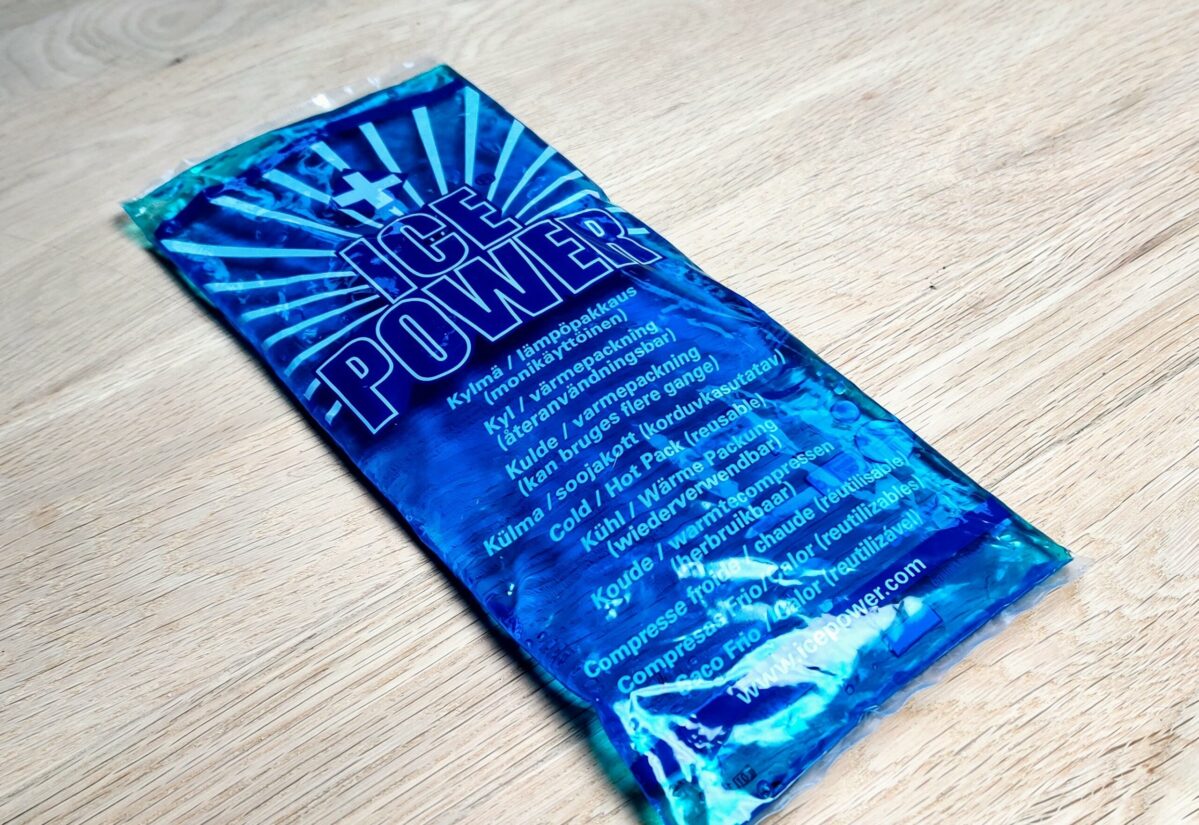
At the Health & Sports Clinic we use this ice pack, which is placed on the acute injury. It can also be heated to relieve tense muscles. It is small and reusable.
The cool bag is good for acute injuries, such as sports injuries and sprains. Pain and swelling are relieved.
There are a number of injuries that can be treated with cold.
- Acute tissue damage and bleeding in muscles caused by blows and impacts
- Acute injuries to joints such as sprains and strains
- Overuse of tissues such as joint and muscle pain
- Overloaded muscles also called myoses
- Increased muscle tension seen as muscle cramps
Procedure:
First, take a tea towel or T-shirt and wrap it around the damaged area. Then, apply the ice pack.
If you place the bag directly on the skin, frostbite may occur. If the injury is severe, apply pressure. Wrap an additional towel tightly around the ice bag.
Depending on the extent of the injury, the time for which the ice pack should be applied to the affected area varies. The larger the injury, the longer the treatment can last. For acute injuries, the bag can be applied for up to an hour at a time. After that, you can slowly reduce the amount and finally use it only as pain relief. For pain relief, it is recommended that the bag be applied for a maximum of 30 minutes at a time.
At the Health & Sports Clinic, we are happy to welcome you if you have an injury. Book an appointment with one of our therapists.