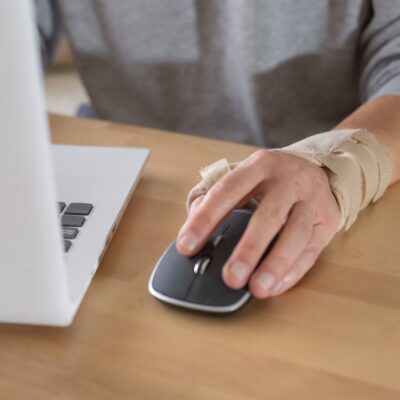

Now that we have to work much more from home, a wide range of pains can arise. One of them can be soreness and pain in the shoulder. A frequent cause is a mouse injury in the shoulder.
Symptoms of mouse injury to the shoulder
Constant pain or tenderness due to muscle inflammation or torn tendons, also called Rotator Cuff Syndrome. Pain in the shoulder can spread to the forearm and fingers.
Shoulder tendonitis is an irritation of a tendon that most often occurs due to overuse. This is not caused by bacteria or a virus, but as a result of overuse.
Typically, it will be felt in the shoulder, and is especially felt during certain activities. You may experience reduced function over a longer period of time. However, it can also occur during unfamiliar work or other activities.
Facts about shoulder tendinitis
- Cause: persistent shoulder strain
- It is common
- Pain occurs when the arm is lifted.
- Surgery may be considered on rare occasions. During the surgery, better space is created for the inflamed tendon.
Mouse Arm – Preventing Mouse Injuries
Prevention is better than cure. Some mouse injuries are simply irreversible, so do yourself a favor by treating your body properly from the start. You can't cure a mouse arm by buying a new mouse, a new mouse pad, or a new trackpad. If you experience any problems, we recommend that you contact us.
Arrange your workplace ergonomically correctly
- Have a proper table to sit or stand at, and make sure to sit on a proper chair, and possibly switch to sitting on the front edge of the chair.
Switch between different tools
- Use different mice, touchpads, keyboards, etc. Also try to periodically place the mouse in the hand you would not normally use for a mouse.
Change your working position frequently.
- Build in regular daily routines so that you alternate between sitting down and standing up at your height-adjustable desk. Make sure to adjust your office chair so that you have weight on your legs and sit with a straight back.
Take lots of small breaks
- Take advantage of the breaks for relaxation and/or exercise.
Do frequent stretching exercises
- Stretching exercises will help reduce muscle tension. As a general rule, do not do exercises that cause pain. If you have already sustained a muscle injury, certain stretching exercises can be downright harmful.
Release your grip on the mouse.
- Hold the mouse lightly and release it completely during the many short periods when you are not using it. Do not hit the keyboard hard. Use shortcut keys. Make sure that the muscles in your arm and hand can relax.
Reduce the double-click speed of your mouse
- Reduce the double-click speed on your mouse to the slowest possible.
Keep your hands and arms warm
- Cold muscles and tendons are at greater risk of injury.
Don't use the computer unnecessarily.
- For example, avoid strenuous games during breaks. They may help you relax mentally, but will strain your mouse arm.
Live healthy!
- This rule is perhaps as important as the others combined. Make sure you exercise regularly and eat a healthy, varied diet. Avoid stress at work and at home. If you can follow these rules, it will be harder for you to get a mouse arm and easier to get rid of it.