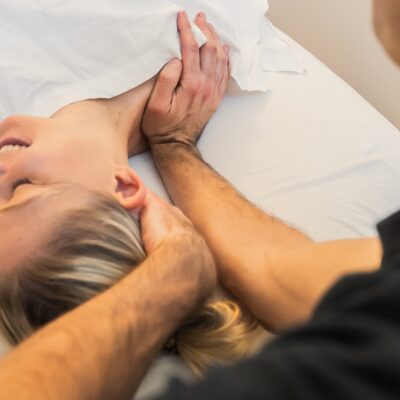

Many people experience tension in their jaw without knowing what is causing it. For some, it manifests as pain that radiates up into the temples, down the neck, or causes headaches. For others, it is a crunch in the jaw or soreness when chewing.
Jaw tension can be very annoying, but fortunately there are good treatment options – including massage, which can relieve tension and provide peace of mind and body.
What is jaw tension?
Jaw tension occurs when the muscles around the jaw joint (called TMJ – temporomandibular joint) become overworked or constantly tense. It can be caused by:
- Stress and unconscious teeth grinding (bruxism)
- Poor posture, e.g. from computer work
- Crooked bite or dental problems
- Injuries or surgeries in the area
- General muscle tension in the neck and shoulders
When the muscles are tense for a long time, it can lead to pain, clicking sounds from the jaw and, in some cases, limited mouth opening.
Symptoms of jaw tension
- Tenderness or pain in the jaw, especially when chewing
- Headache or pain in the temples
- Clicking or crunching in the jaw joint
- Pain that radiates to the ear, neck, or shoulders
- Feeling of locking or reduced mobility in the jaw
- Increased tension in the face – some people also clench their teeth at night
How can massage help?
Massage can be a very effective treatment for jaw tension. A professional massage therapist can:
- Improve blood circulation in the area and thus relieve pain and inflammation
- Reduce tension in the neck and shoulders, which is often associated with jaw tension
- Reduce the stress response in the body so you can relax better
Many people experience significant relief after just one treatment, and with repeated treatments, tension can gradually decrease.
What can you do yourself?
In addition to massage, you can do a lot yourself to relieve jaw tension:
- Pay attention to whether you clench your teeth during the day – consciously relax your jaw.
- Place a heating pad on your jaw to help the muscles relax.
- Do gentle jaw exercises, such as opening and closing your mouth slowly without squeezing.
- Have your bite checked by the dentist – you may need a mouth guard.
Book an appointment and feel the difference
Jaw tension doesn't have to be something you live with in the long run. With professional massage, you can get the pain under control, improve your quality of life, and prevent the tension from settling elsewhere in the body.
👉 Book an appointment today, then we will help you get peace of mind in your jaw and a more relaxed face.
FAQ about jaw tension
Why do you get jaw tension?
The most common cause is stress and the habit of grinding or clenching your teeth (often unconsciously – especially at night). Poor posture, dental problems or tension in the neck and shoulders can also contribute.
Can jaw tension cause headaches?
Yes, tension in the jaw can radiate up to the temples and cause tension headaches. Many people actually find that their headaches are significantly reduced when the jaw is loosened.
What does jaw tension feel like?
It can feel like tenderness, clicking sounds, a crunch in the jaw joint, or a feeling that the jaw is “locked.” Some also experience pain that radiates toward the ears, down the neck, or into the shoulders.
Can massage help with jaw tension?
Yes! Massage is one of the most effective treatments. By loosening the muscles around the jaw, neck and shoulders, you can reduce pain and restore normal function to the jaw.
How quickly does massage work against jaw tension?
Many people notice significant relief after the first treatment. For lasting results, a course of several treatments combined with exercises and stress management is often recommended.
Can you massage your own jaw?
Yes, light self-massage can help, such as by gently pressing the muscles in front of the ear and along the jaw. But for a more in-depth treatment, it may be worth getting professional help.